
Precision Lighting: Intensity and Spectral Light Modulation for Improved Plant Growth Outcomes within Controlled Environment Agriculture

Precision Lighting: Intensity and Spectral Light Modulation for Improved Plant Growth Outcomes within Controlled Environment Agriculture
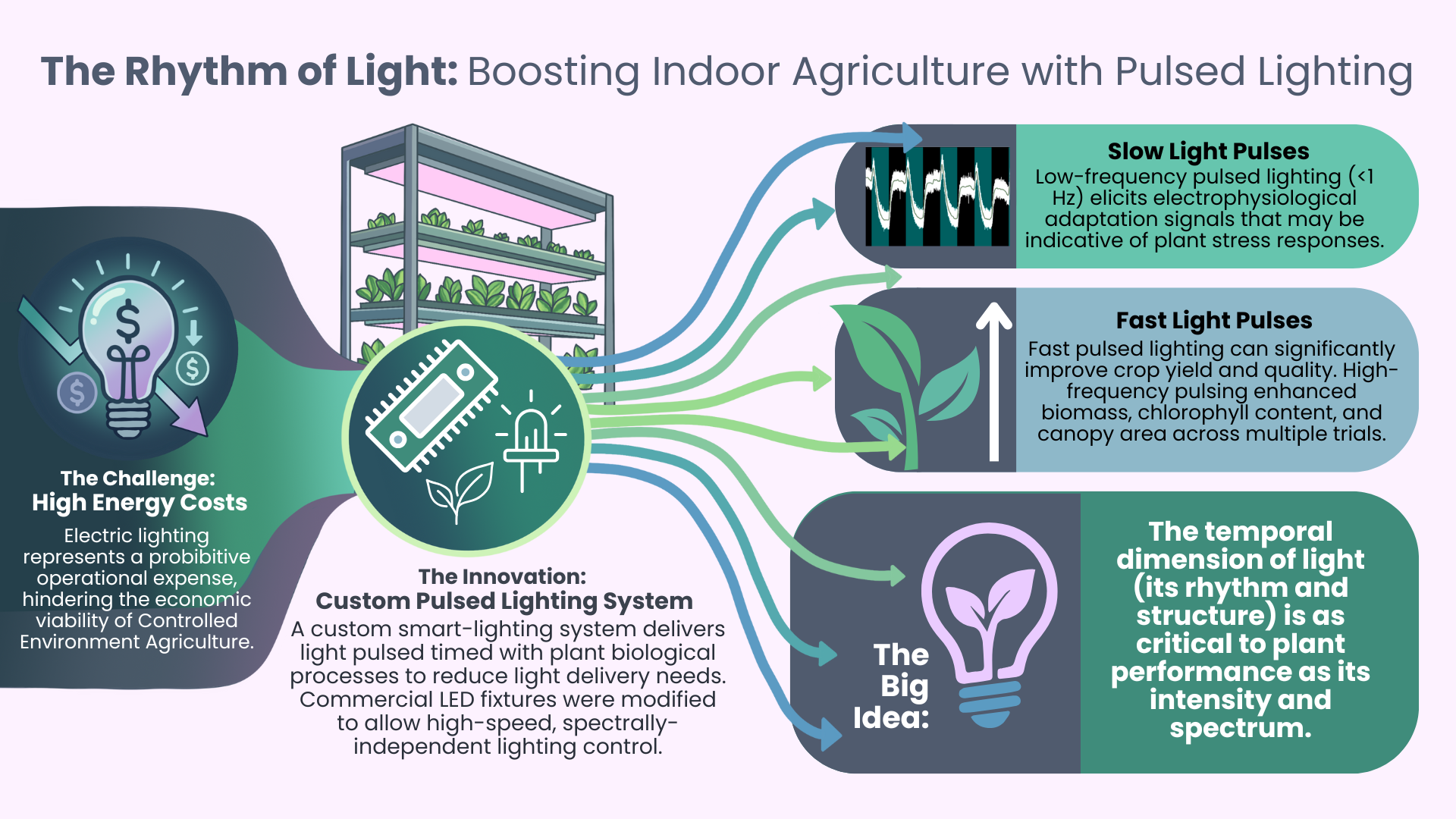
Controlled Environment Agriculture (CEA), including vertical farming, is increasingly limited by the high energy costs of electric lighting. As LED technologies approach their efficiency limits, future gains must come from rethinking how light is delivered rather than from improvements in hardware alone. This research investigates temporal and spectral modulation of light as a strategy to improve plant performance while reducing energy use.
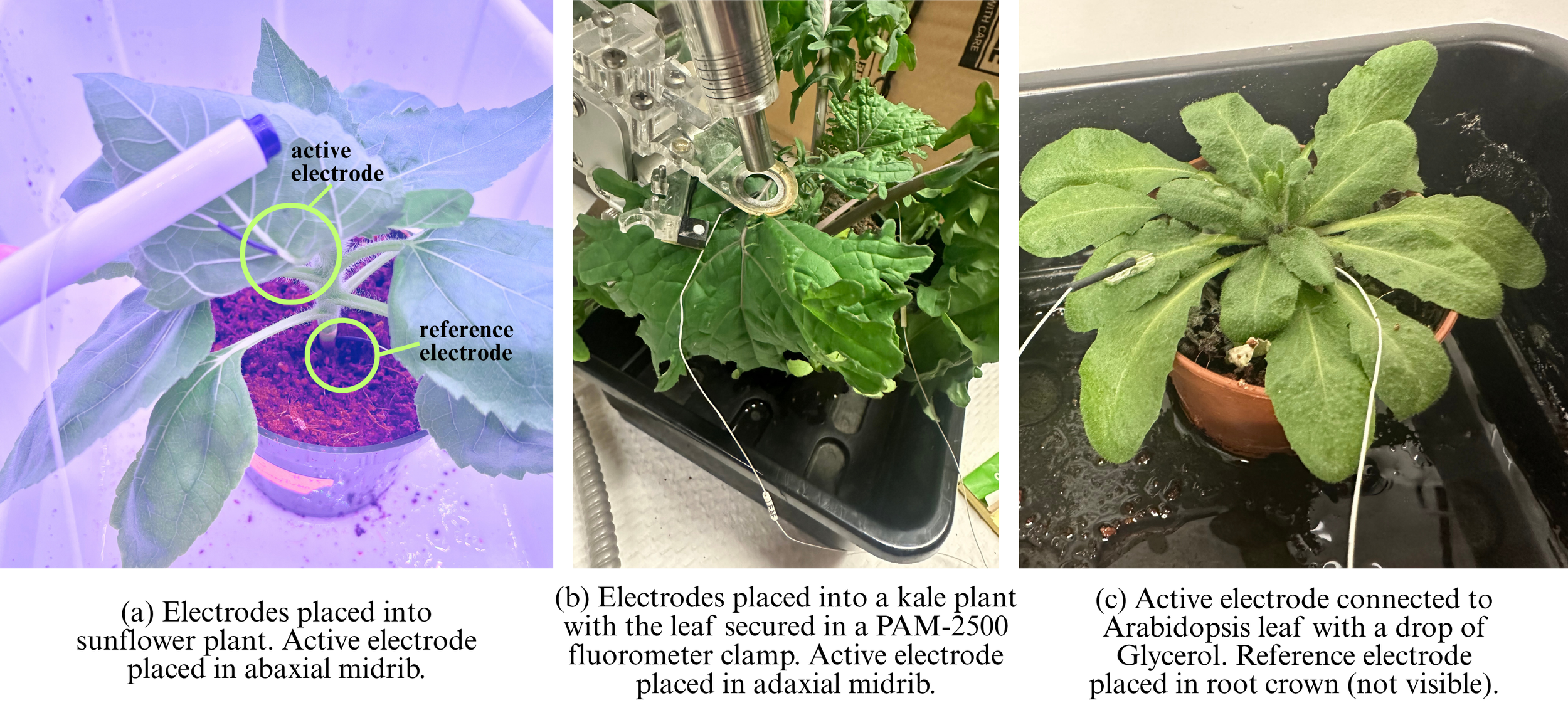
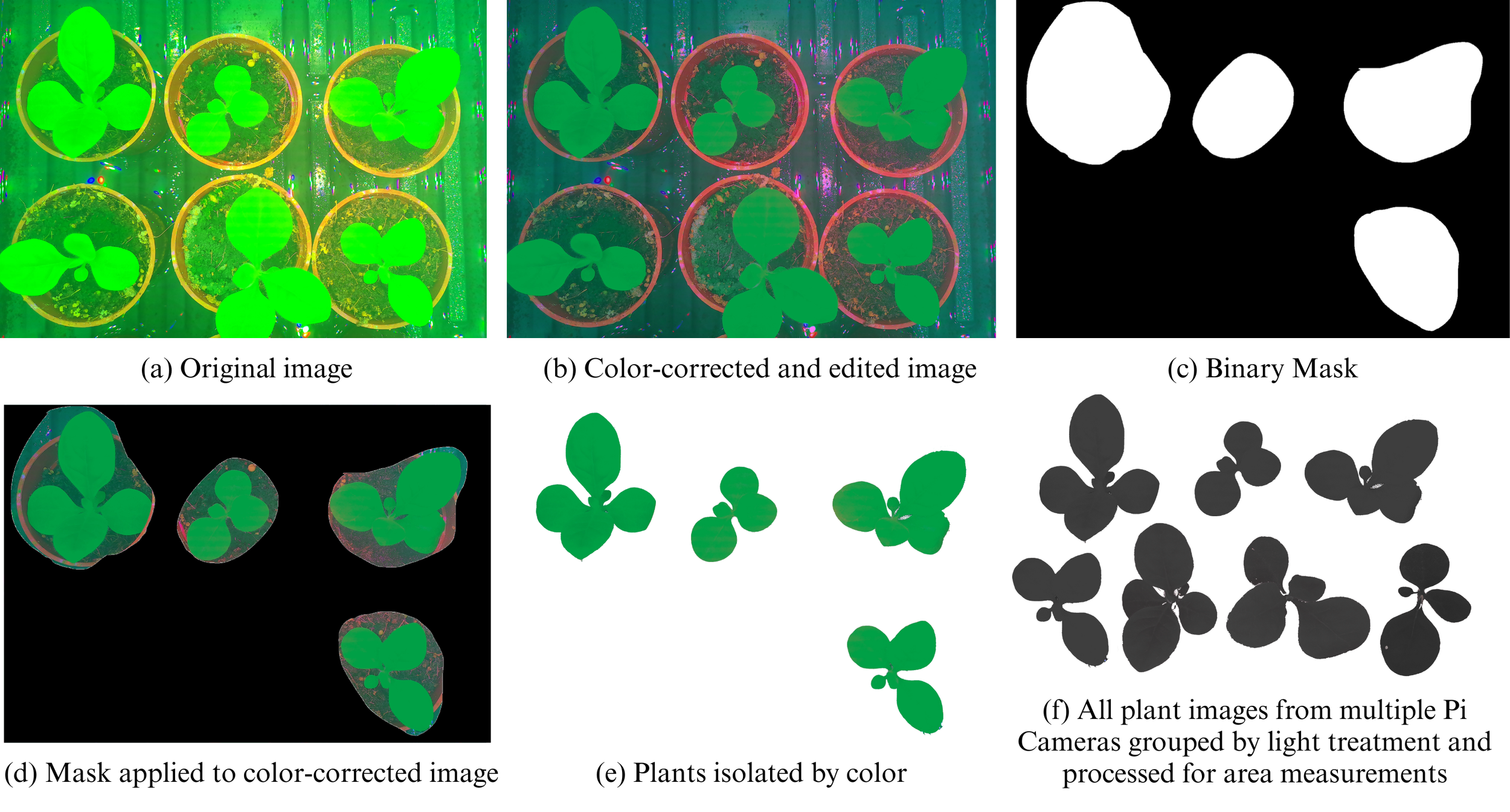
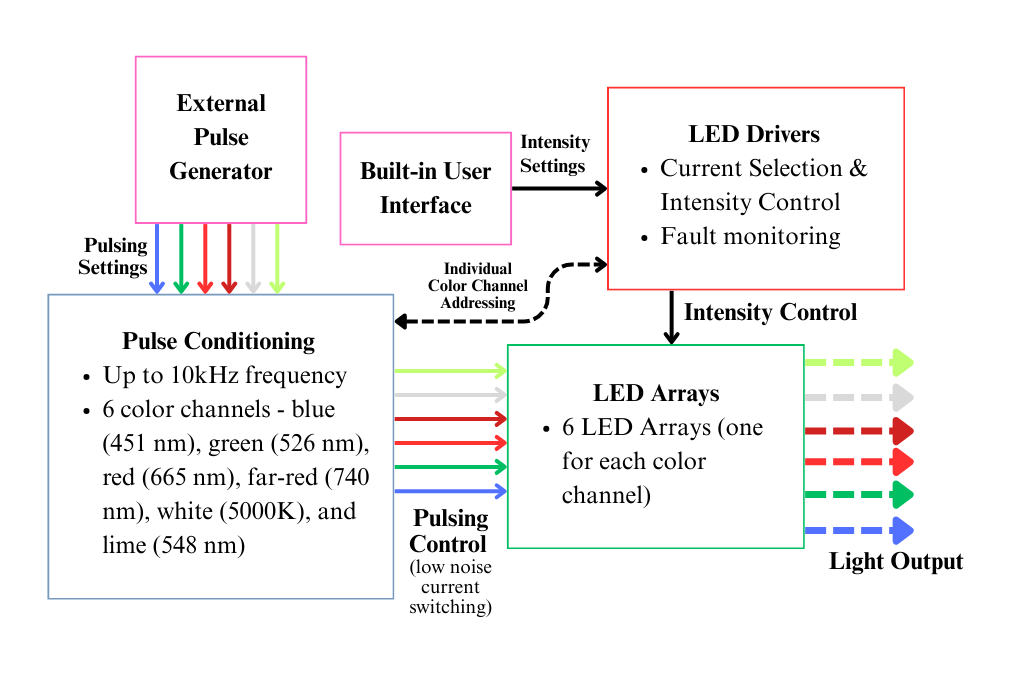
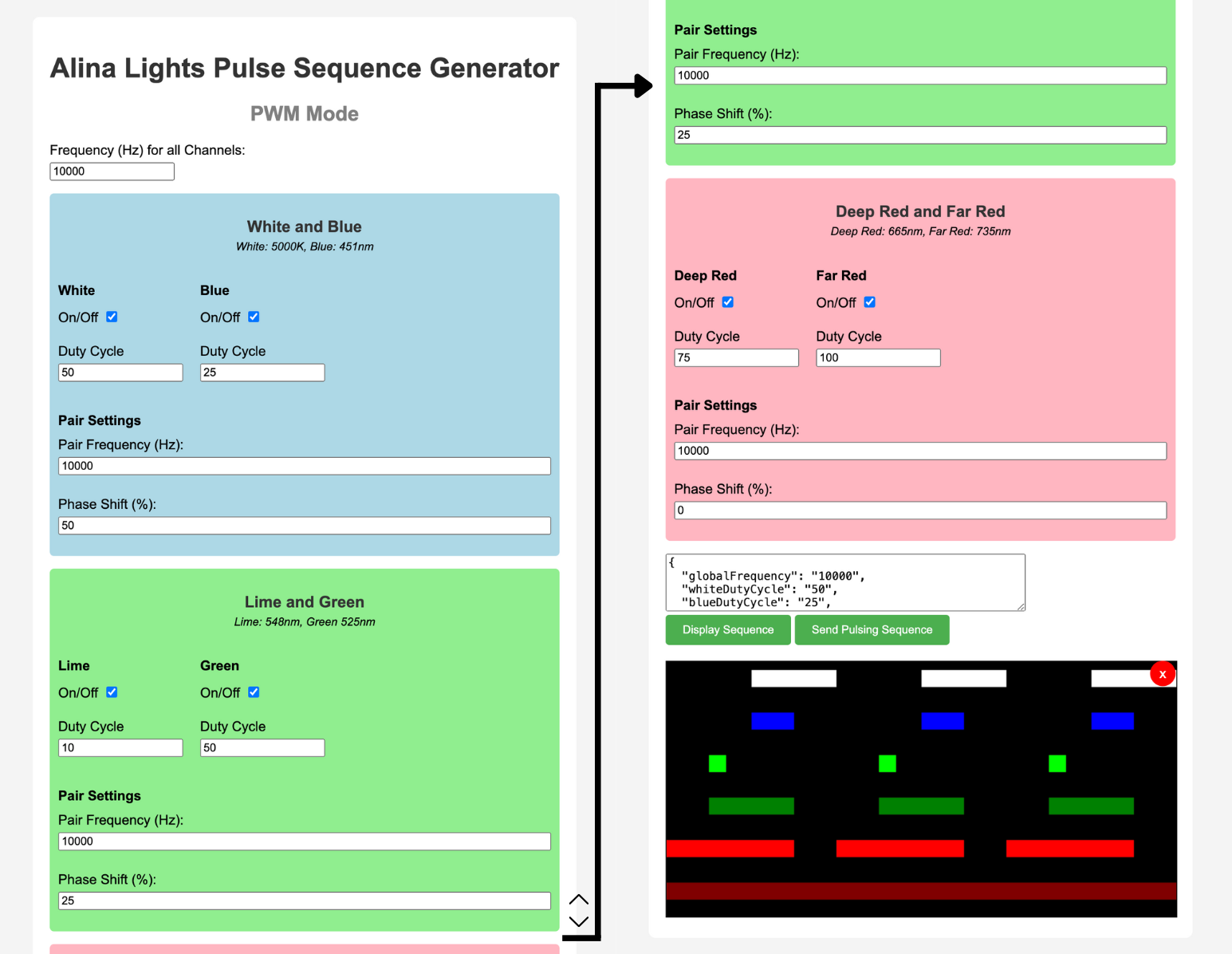
A custom high-precision pulsed lighting system was developed to deliver light at controlled intervals aligned with plant physiological responses. Commercial LED fixtures were modified to allow independent, external control of individual spectral channels using a dual-mode pulse generator capable of both microcontroller-based PWM (pulse-width-modulation) and FPGA-based high-speed sequencing. Plant responses were evaluated through continuous electrophysiological monitoring and image-based growth analysis.
A key outcome of this work is the discovery of a previously unreported electrophysiological response regime: sub-minute acclimation to light-dark cycles, characterized by secondary electrical peaks during dark periods. This response was observed across multiple plant species and depended on light frequency and intensity, emerging consistently under slow pulsed lighting. These findings suggest that very low-frequency light modulation can trigger stress-associated signaling.
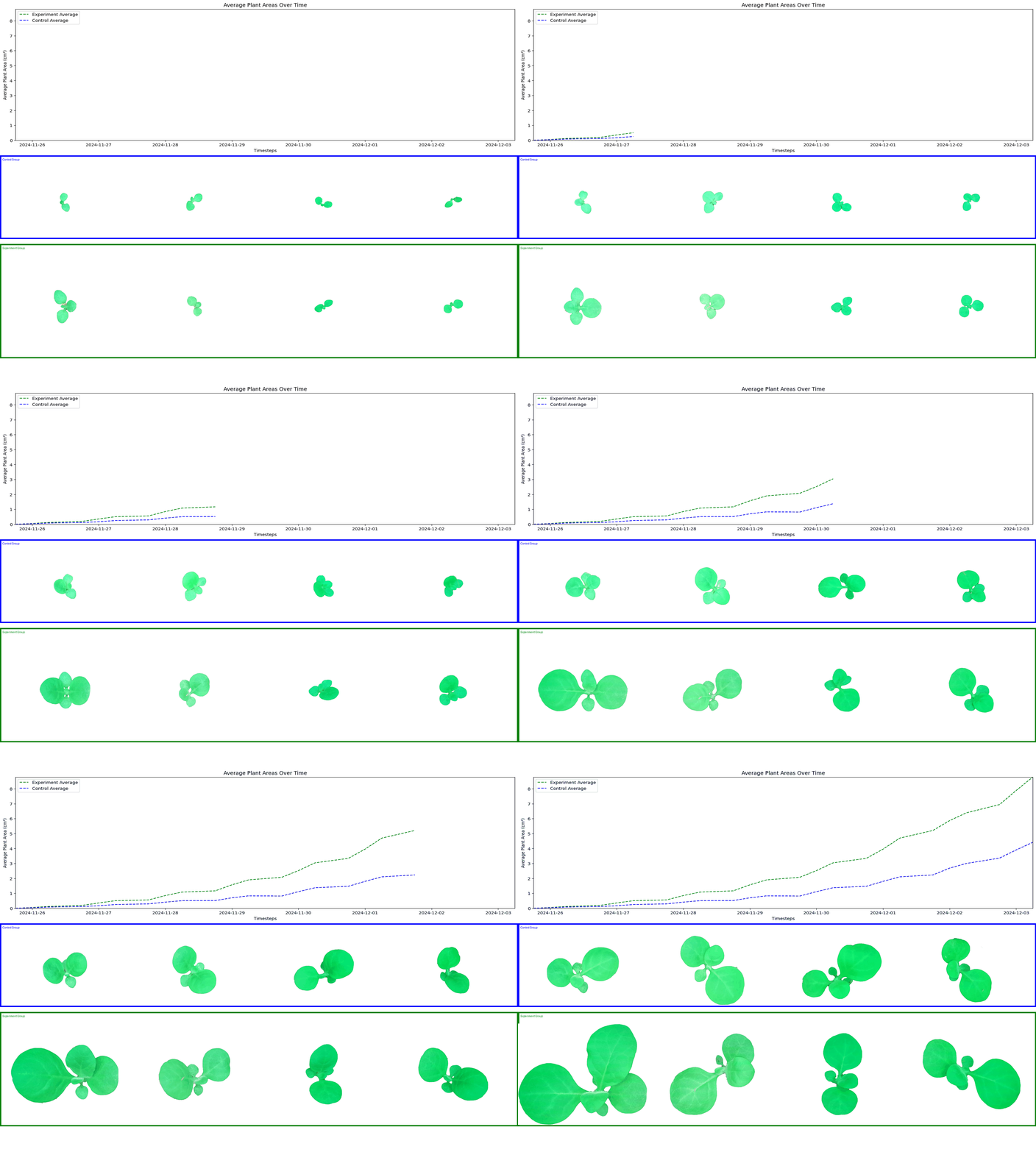
Growth trials using high-frequency pulsed lighting demonstrated that appropriately tuned fast pulsing can sustain or enhance growth efficiency at reduced light intensities across several crops. Together, these results highlight temporal light modulation as a promising design variable for energy-efficient, biologically responsive CEA systems.
Project Date: 2021-2025
Researchers: Lily Donaldson,
Collaborator: